Now Reading: 15 Proven Ways to Save Fuel in 2026: Cut Your Fuel Bills Dramatically
-
01
15 Proven Ways to Save Fuel in 2026: Cut Your Fuel Bills Dramatically

With fuel prices continuing to put pressure on household budgets around the world — and particularly in Pakistan where petrol prices have risen significantly in recent years — improving your car's fuel economy is one of the most practical things you can do to protect your finances.
The good news is that most drivers are leaving significant fuel savings on the table through habits and oversights that are entirely fixable. Research consistently shows that driving style and basic maintenance alone can improve fuel economy by 20-30% — without spending a single rupee on modifications or upgrades.
I have compiled the 15 most effective fuel-saving techniques based on real-world testing data, automotive engineering research, and the experiences of drivers who have dramatically reduced their fuel bills. These tips work for petrol cars, diesel cars, and hybrid vehicles alike.
---
How Much Can You Actually Save?
Before the tips let us put some real numbers on the table.
The average Pakistani driver covers approximately 15,000-20,000 km per year. At current petrol prices and typical fuel economy of 12-14 km per liter, annual fuel costs run to approximately PKR 200,000-280,000 for many drivers.
Implementing the tips in this guide consistently can improve fuel economy by 20-30%. That translates to:
- Annual saving: PKR 40,000-84,000
- Five-year saving: PKR 200,000-420,000
That is real money — enough to significantly offset the cost of your next car.
---
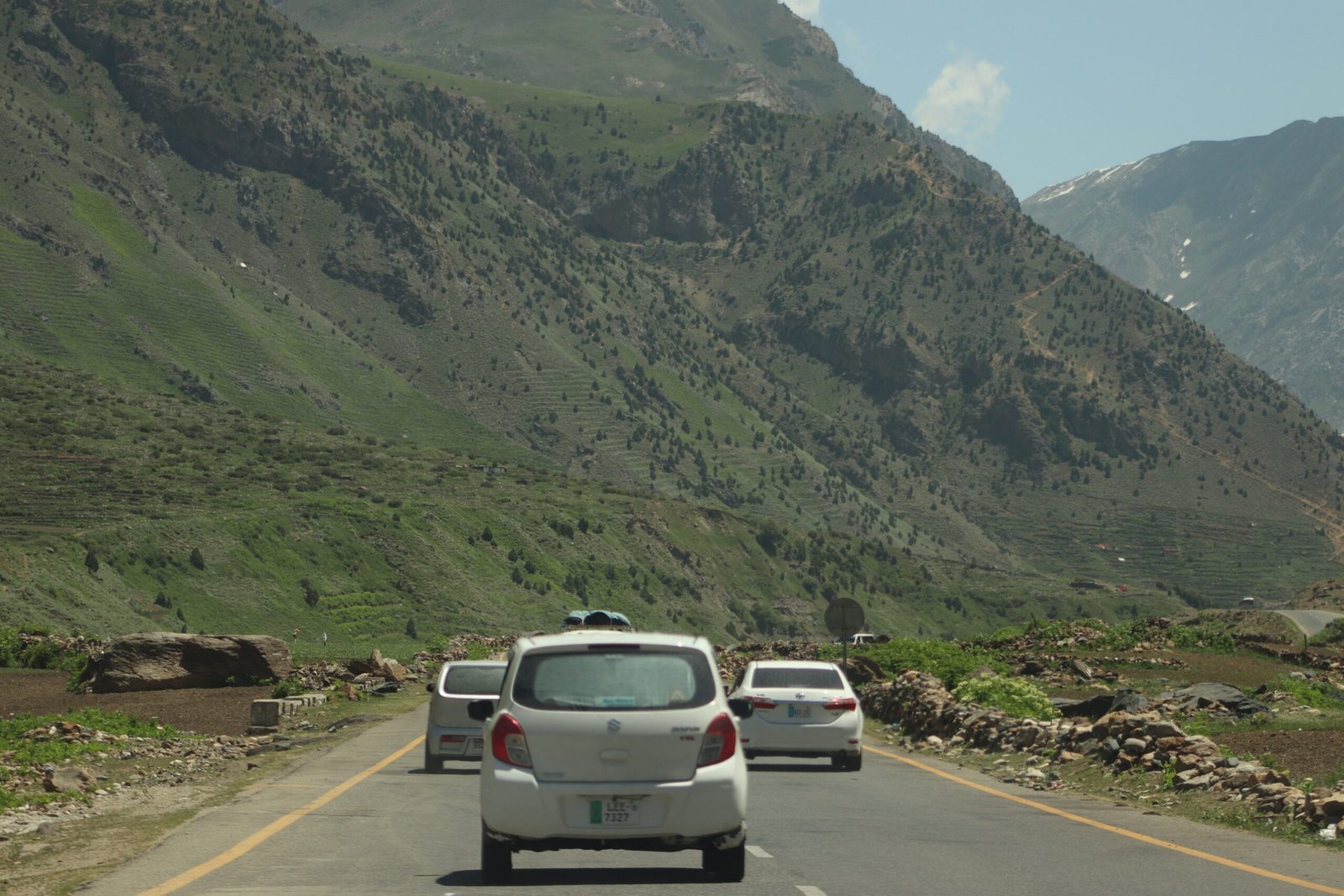
Tip 1 — Slow Down on the Highway
This is the single most impactful fuel-saving tip available and the one most drivers ignore.
Fuel consumption increases dramatically at higher speeds due to aerodynamic drag — which increases with the square of speed. This means going from 100 km/h to 120 km/h does not increase drag by 20% — it increases it by 44%.
Real world fuel economy at different speeds:
- 80 km/h: baseline fuel economy
- 100 km/h: approximately 10-15% more fuel than 80 km/h
- 120 km/h: approximately 25-30% more fuel than 80 km/h
- 140 km/h: approximately 45-50% more fuel than 80 km/h
On a highway journey of 200 km the difference between driving at 100 km/h and 120 km/h can cost you an extra liter or more of fuel — for a journey that takes only 10 minutes less.
Action: On motorways aim for 100-110 km/h rather than 120-130 km/h. The time saving is minimal. The fuel saving is significant.
Potential saving: 15-25% on highway fuel consumption
---
Tip 2 — Use Cruise Control on Motorways
Cruise control maintains a perfectly constant speed — something human drivers struggle to do consistently. The natural tendency when driving manually is to slightly accelerate and decelerate repeatedly — each small acceleration uses extra fuel.
Cruise control eliminates this micro-acceleration pattern. Research shows cruise control improves motorway fuel economy by 6-10% compared to manual speed maintenance.
Modern adaptive cruise control — which automatically maintains a safe following distance — provides the same fuel economy benefit while also reducing driver fatigue on long journeys.
Action: Engage cruise control on any road where traffic flow allows a consistent speed — motorways, dual carriageways, and clear main roads.
Potential saving: 6-10% on motorway fuel consumption
---
Tip 3 — Keep Tyres Properly Inflated
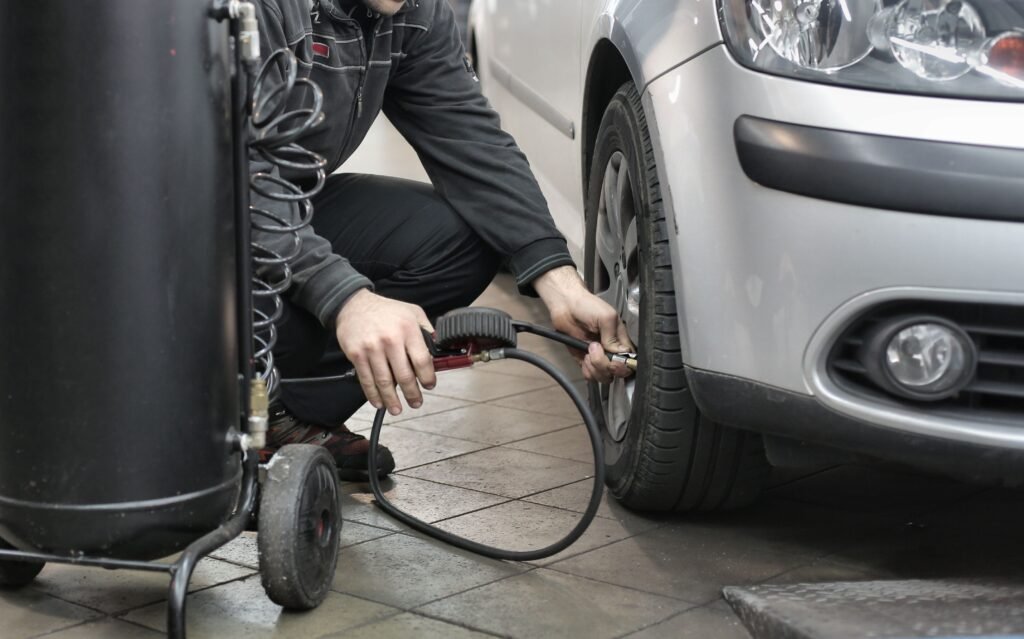
Underinflated tyres are one of the most common and most costly sources of unnecessary fuel consumption — and the fix costs absolutely nothing.
When a tyre is underinflated it has a larger contact patch with the road surface. This increases rolling resistance — the force that opposes the car's forward motion. The engine must work harder and burn more fuel to overcome this additional resistance.
The numbers:
- Tyres underinflated by 10 PSI: fuel economy reduced by approximately 3-5%
- Tyres underinflated by 20 PSI: fuel economy reduced by approximately 7-10%
Many drivers routinely drive on tyres that are 10-15 PSI below the recommended pressure — losing 3-7% of their fuel economy without even realizing it.
How to check:
- Find the correct pressure on the sticker inside your driver's door frame — not on the tyre sidewall
- Check pressure monthly when tyres are cold — hot tyres give higher readings
- Use a quality tyre pressure gauge — the ones at petrol stations are often inaccurate
- Check all four tyres plus the spare
In Pakistan: Extreme summer heat causes tyre pressure to increase. Check more frequently in summer — but do not deflate hot tyres. Check again when cool.
Action: Check tyre pressure every month. Takes 5 minutes and costs nothing.
Potential saving: 3-7% fuel economy improvement
---
Tip 4 — Remove Unnecessary Weight
Your car's engine has to work harder — and burn more fuel — to accelerate heavier loads. Every 50 kg of unnecessary weight reduces fuel economy by approximately 1-2%.
Common sources of unnecessary weight Pakistani drivers carry:
- Heavy tools or equipment permanently in the boot that are rarely needed
- Bags of sand or bricks carried "just in case"
- Multiple spare wheels
- Unnecessary aftermarket accessories
- Full water containers stored permanently in the car
Also consider roof racks and roof boxes. An empty roof rack increases aerodynamic drag and reduces fuel economy by 2-8% even when carrying nothing. Remove roof racks when not in use.
Action: Remove everything from your boot that you do not need on every journey. Take the roof rack off when not needed.
Potential saving: 1-5% depending on how much weight you remove
---
Tip 5 — Plan Your Journeys to Avoid Traffic
Stop-start traffic is the enemy of fuel economy. Every time you brake to a stop you waste the kinetic energy your engine used fuel to create. Every time you accelerate from a stop you burn fuel to recreate that energy.
A journey of 10 km in heavy stop-start traffic can use 3-4 times more fuel than the same 10 km at a steady 60 km/h.
Journey planning strategies:
- Use Google Maps or Waze to check traffic before leaving — route around congestion
- Adjust departure time to avoid peak traffic hours when possible
- Combine multiple errands into one journey rather than multiple short trips
- Cold starts use more fuel — combining errands means fewer cold starts
In Pakistani cities: Karachi and Lahore traffic is particularly fuel-intensive. Leaving 30-45 minutes earlier or later than peak hours can dramatically reduce both journey time and fuel consumption.
Action: Check traffic before every journey. Leave earlier or later when possible to avoid peak congestion.
Potential saving: 10-20% in urban driving situations
---
Tip 6 — Turn the Engine Off When Stationary
Modern fuel-injected engines use virtually no fuel when switched off — and restart instantly. Idling for just one minute uses approximately the same fuel as driving 1-2 km.
When to turn your engine off:
- Any stop expected to last more than 60 seconds
- Railway crossings — often 3-5 minutes of waiting
- School pickup and dropoff — often 10-15 minutes of waiting
- Bank or shop queues where you park and wait
- Train level crossings
Many modern cars now feature automatic stop-start systems that do this automatically. If your car has this system — do not disable it. It is saving you money every time it activates.
In Pakistan: With frequent power outages, traffic signal failures, and long railway crossing waits — engine-off habits can save significant fuel over a full year of driving.
Action: Turn engine off for any stop over 60 seconds. Do not idle unnecessarily.
Potential saving: 3-8% of total fuel consumption
---
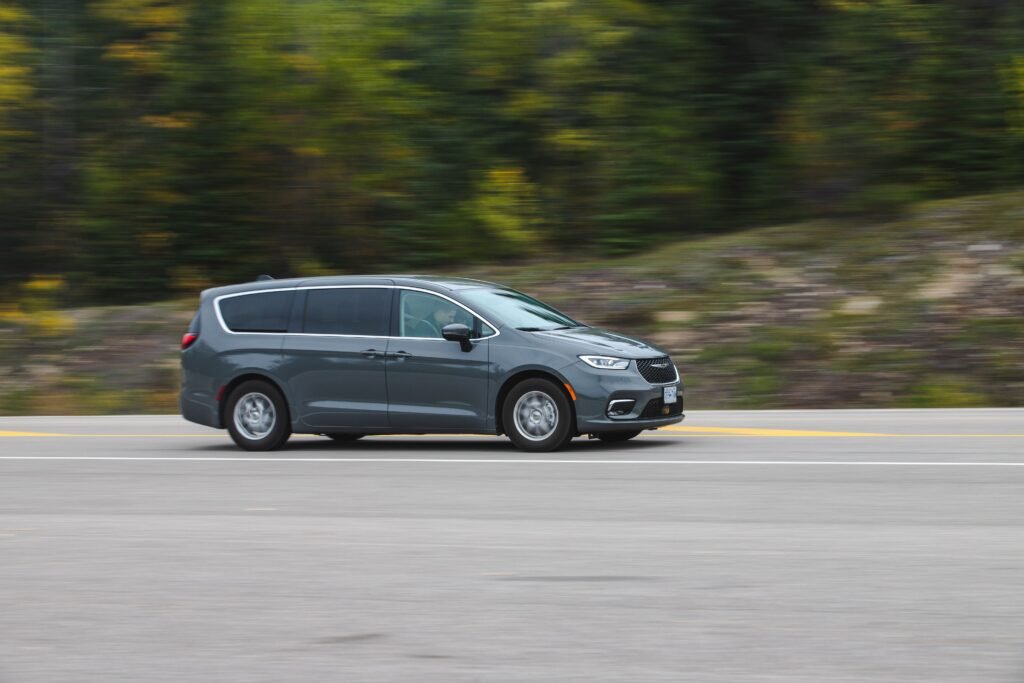
Tip 7 — Drive Smoothly — Accelerate and Brake Gently
Aggressive driving — hard acceleration, late heavy braking, frequent speed changes — is one of the most significant fuel wasters. Research shows that aggressive drivers use 20-40% more fuel than smooth drivers covering identical routes.
The physics are simple: every time you brake hard you waste kinetic energy as heat. Every time you accelerate hard you use significantly more fuel than gentle acceleration to the same speed.
Smooth driving techniques:
Accelerate gently: After starting from rest, accelerate smoothly and progressively. You do not need to reach full speed in 5 seconds. 10-15 seconds of gentle acceleration to cruising speed uses dramatically less fuel.
Look further ahead: Train yourself to look further down the road. If you see a red light ahead, ease off the accelerator early and let the car coast — using engine braking rather than reaching the light at speed and braking heavily.
Maintain following distance: A larger following distance gives you time to respond smoothly to traffic ahead rather than braking hard repeatedly.
Anticipate bends: Slow smoothly before corners rather than braking heavily at the last moment.
Action: Consciously practice smooth acceleration and early, gentle braking. Within one week it becomes natural habit.
Potential saving: 15-25% of total fuel consumption
---
Tip 8 — Use the Highest Gear Possible
Engine speed — measured in RPM — directly affects fuel consumption. Higher RPM means more fuel injected per minute. Running your engine at lower RPM by using a higher gear whenever possible directly reduces fuel consumption.
For manual transmission drivers:
- Change up to the next gear as early as possible without causing the engine to labour or knock
- For most cars this means changing up around 2,000-2,500 RPM for petrol engines
- On long downhill stretches use engine braking in a lower gear rather than riding the brakes
For automatic transmission drivers:
- Use Sport mode sparingly — it holds lower gears longer and increases fuel consumption
- On motorways check that the transmission is in its highest gear — some autos hunt between gears unnecessarily
- Eco mode — if available — optimizes shift points for fuel economy
Action: Manual drivers — change up early. Automatic drivers — use Eco mode on routine journeys.
Potential saving: 5-10% fuel economy improvement
---
Tip 9 — Service Your Car Regularly
A poorly maintained engine is an inefficient engine. Regular servicing directly improves fuel economy.
Specific maintenance items that affect fuel economy:
Engine oil: Old degraded engine oil has higher friction than fresh oil. Using the correct viscosity oil recommended by your manufacturer also matters — thicker oil than specified increases internal friction.
Air filter: A blocked air filter restricts airflow to the engine. The engine compensates by using more fuel to maintain power output. Replacing a severely blocked air filter can improve fuel economy by 6-10%.
Spark plugs: Worn spark plugs cause incomplete combustion — fuel that does not fully combust is wasted fuel. New spark plugs restore proper combustion efficiency.
Fuel injectors: Dirty or partially blocked injectors spray fuel less efficiently. Fuel injector cleaner added to the tank every 10,000 km helps maintain injector performance.
Oxygen sensor: A faulty oxygen sensor can cause the engine to run rich — using more fuel than necessary. A dashboard check engine light often indicates this issue.
Action: Follow your car's service schedule strictly. Pay particular attention to air filter, spark plug, and oil changes.
Potential saving: 5-15% depending on how overdue service is
---
Tip 10 — Choose the Right Fuel
Using the correct fuel grade for your engine matters — but using a higher grade than required does not improve fuel economy and wastes money.
Octane rating:
Most standard petrol engines are designed for 87-91 octane fuel. Using 95 or 98 octane in an engine that does not require it provides no fuel economy benefit whatsoever — you are simply paying more for no return.
High performance engines with high compression ratios do require higher octane fuel. Check your owner's manual for the correct specification.
In Pakistan: RON 92 is the standard fuel. RON 95 or 97 premium fuel is available but only provides benefit in engines specifically calibrated for it — typically turbocharged performance engines.
Fuel additives: Quality petrol from reputable stations already contains the detergents and additives needed for clean combustion. Aftermarket fuel additives claiming dramatic fuel economy improvements are generally not worth the money.
Action: Use the fuel grade specified in your owner's manual. Do not pay for premium fuel unless your engine specifically requires it.
Potential saving: Money saved by not buying unnecessary premium fuel
---
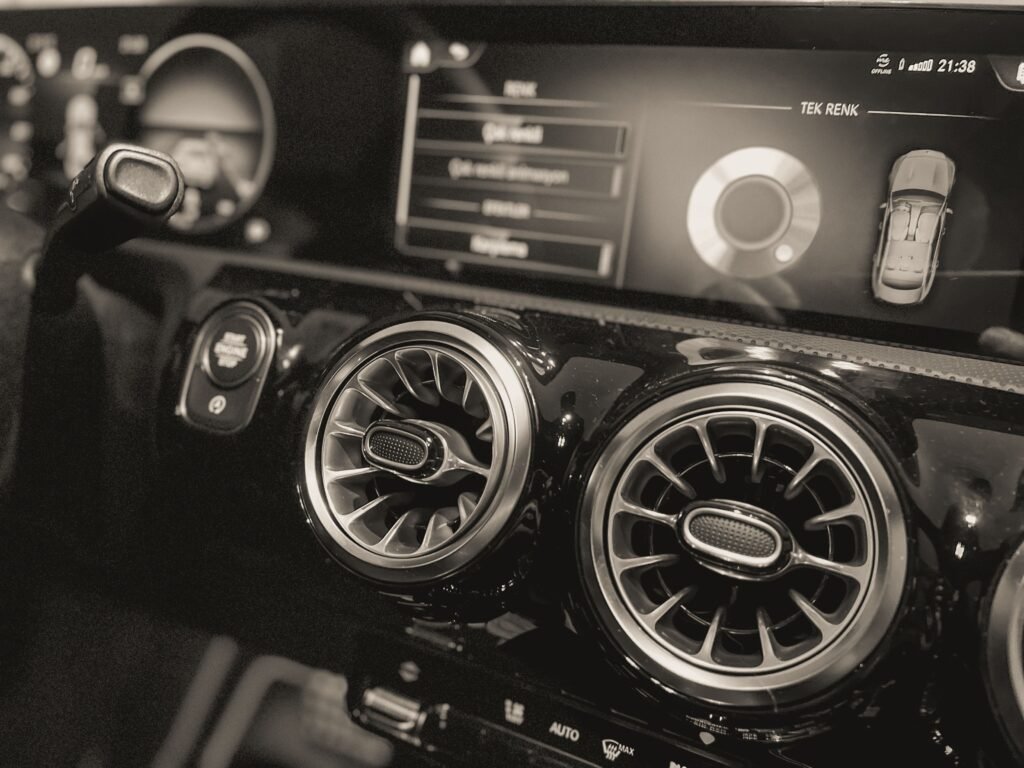
Tip 11 — Use Air Conditioning Wisely
Air conditioning is one of the largest single consumers of fuel in a car — it can reduce fuel economy by 10-20% when running at full load.
In Pakistan's climate switching off the AC entirely is not realistic for most of the year. But using it wisely makes a significant difference.
Smart AC usage:
Pre-cool strategy: If your car has been parked in the sun, open the windows briefly before starting to let hot air escape. Then run AC on maximum for 2-3 minutes with windows open to purge hot air. Then close windows and set to normal temperature. This reaches comfortable temperature faster and uses less total energy than trying to cool a super-hot car from scratch.
Use recirculation mode: Once the cabin has cooled, switch to recirculation mode. This recirculates already-cooled air rather than drawing in hot outside air — dramatically reducing the cooling load and fuel consumption.
Set temperature higher: 24-25°C rather than 18-20°C uses significantly less fuel. Add 1-2 degrees to your usual setting and see if you notice a difference.
Turn off slightly before reaching destination: Turn AC off 3-5 minutes before your destination. The cabin stays comfortable and you save fuel on the final stretch.
Windows vs AC at low speeds: At speeds below 50 km/h open windows use less fuel than AC. Above 60-70 km/h aerodynamic drag from open windows exceeds the fuel cost of AC — close windows and use AC.
Action: Use recirculation mode, set temperature at 24-25°C, pre-cool strategy for hot cars.
Potential saving: 5-15% of urban fuel consumption
---
Tip 12 — Reduce Aerodynamic Drag
Aerodynamic drag is the force that opposes your car's forward motion through air. Reducing drag directly reduces the fuel your engine needs.
Simple ways to reduce drag:
Close windows at highway speeds: Open windows at 100+ km/h create more drag than running AC. Keep windows closed and use AC on motorways.
Remove roof racks when not in use: An empty roof rack increases drag and fuel consumption by 2-8% at highway speeds.
Remove roof boxes when not in use: A roof box increases drag by 10-25% depending on size and shape. Always remove when not carrying loads.
Keep windows clean: Clean glass creates slightly less turbulence than dirty glass — minor but real.
Avoid large aftermarket spoilers: Unless properly engineered, aftermarket spoilers often increase drag rather than reduce it.
Action: Remove roof racks and boxes when not needed. Keep windows closed at highway speeds.
Potential saving: 2-10% on highway fuel consumption
---
Tip 13 — Avoid Short Cold Start Journeys
A cold engine — one that has not reached normal operating temperature — uses significantly more fuel than a warm engine. Fuel injection systems run rich during warm-up to compensate for poor fuel atomization when engine components are cold.
A petrol engine reaches operating temperature after approximately 5-10 minutes of driving. During this warm-up period fuel economy can be 30-50% worse than when fully warm.
If you make multiple short journeys of 2-3 km each — starting a cold engine each time — a disproportionate amount of each journey is spent in this inefficient cold-start phase.
Strategies to minimize cold start fuel waste:
- Combine multiple short errands into one continuous journey
- If making multiple stops in one area, keep engine running or park centrally and walk between stops
- Do not idle to warm up the engine — modern fuel-injected engines warm up faster under light driving load than idling
Action: Combine short journeys where possible. Do not make unnecessary cold-start trips.
Potential saving: 10-20% for drivers who currently make many short separate journeys
---
Tip 14 — Monitor Your Fuel Economy
You cannot improve what you do not measure. Tracking your fuel economy gives you immediate feedback on whether your fuel-saving efforts are working — and quickly reveals if something is wrong with your car.
How to track fuel economy manually:
Step 1 — Fill your tank completely and note the odometer reading
Step 2 — Drive normally until the tank is low
Step 3 — Fill the tank completely again and note the liters added and current odometer
Step 4 — Calculate: km driven divided by liters added = km per liter
Example: 400 km driven, 32 liters added = 12.5 km per liter
Many modern cars display real-time and average fuel economy in the instrument cluster — use this information to develop a feel for which driving conditions and habits use most fuel.
If your fuel economy suddenly drops significantly without explanation — have your car checked. A 10%+ unexplained drop in fuel economy often indicates a mechanical issue that needs attention.
Action: Track fuel economy every tank. Use your car's built-in fuel economy display actively.
Potential saving: Awareness enables all other savings on this list
---
Tip 15 — Consider Your Next Car Purchase Carefully
Every tip in this guide helps — but the most significant fuel economy improvement most drivers can make is choosing a more efficient car for their next purchase.
The fuel economy difference between the least and most efficient cars in each segment is enormous:
Compact sedans:
- Toyota Corolla Hybrid: 53 mpg combined
- Average compact petrol sedan: 30-35 mpg combined
- Difference: 50%+ better fuel economy
SUVs:
- Toyota RAV4 Hybrid: 41 mpg city
- Average non-hybrid compact SUV: 25-28 mpg city
- Difference: 45-60% better fuel economy
Electric vehicles:
- Running cost equivalent of 80-100 km per liter
- Dramatically lower running costs than any petrol vehicle
For Pakistani buyers: The Toyota Yaris and Corolla Hybrid offer the best fuel economy of any commonly available cars in Pakistan. If you are considering a new car purchase and fuel costs are a concern — hybrid options should be at the top of your list.
Action: When buying your next car prioritize fuel economy — it pays dividends for the entire ownership period.
Potential saving: 30-60% less fuel cost for the life of your next car
---

Complete Summary — 15 Fuel Saving Tips
| Tip | Action | Potential Saving |
|-----|--------|-----------------|
| 1. Slow down | Drive 100 km/h not 120 km/h on motorways | 15-25% highway |
| 2. Use cruise control | Engage on motorways and clear roads | 6-10% highway |
| 3. Check tyre pressure | Monthly check, correct inflation | 3-7% overall |
| 4. Remove weight | Clear boot, remove roof rack | 1-5% overall |
| 5. Plan journeys | Avoid traffic, combine trips | 10-20% urban |
| 6. Turn off engine | Off for stops over 60 seconds | 3-8% overall |
| 7. Drive smoothly | Gentle acceleration and braking | 15-25% overall |
| 8. Use highest gear | Change up early, avoid low gears | 5-10% overall |
| 9. Service regularly | Air filter, plugs, oil on time | 5-15% overall |
| 10. Use correct fuel | Do not pay for unnecessary premium | Money saved |
| 11. Use AC wisely | Recirculation, 24-25°C setting | 5-15% urban |
| 12. Reduce drag | Remove roof racks, close windows | 2-10% highway |
| 13. Avoid cold starts | Combine short journeys | 10-20% for short trips |
| 14. Monitor economy | Track every tank | Enables all savings |
| 15. Choose efficient car | Hybrid or EV for next purchase | 30-60% lifetime |
Total realistic saving from tips 1-14: 20-35% reduction in fuel consumption
---
Frequently Asked Questions (FAQ)
Q: What is the most effective way to save fuel?
A: Driving smoothly — gentle acceleration and early gentle braking — combined with reducing motorway speed from 120 km/h to 100 km/h are the two highest-impact fuel-saving changes most drivers can make immediately. Together they can reduce fuel consumption by 25-35%.
Q: Does turning off the AC save fuel?
A: Yes — significantly. AC can reduce fuel economy by 10-20% at full load. Using recirculation mode, setting temperature at 24-25°C, and pre-cooling hot cars reduces AC fuel consumption substantially without sacrificing comfort.
Q: How much fuel does idling waste?
A: A typical petrol engine idles at approximately 0.5-0.8 liters per hour. Ten minutes of unnecessary idling wastes approximately 0.1 liters of petrol. In a full year, unnecessary idling can waste 5-10 liters or more.
Q: Does tyre pressure really affect fuel economy?
A: Yes — significantly. Tyres underinflated by even 10 PSI reduce fuel economy by 3-5%. Since many drivers routinely have underinflated tyres this is one of the easiest free fuel savings available.
Q: What speed gives the best fuel economy?
A: For most cars the most fuel-efficient cruising speed is between 80-90 km/h. Below this speed the engine is inefficiently loaded relative to fuel consumption. Above this speed aerodynamic drag increases fuel consumption rapidly.
Q: Does a dirty air filter affect fuel economy?
A: Yes. A severely clogged air filter restricts airflow to the engine causing it to run rich — using more fuel for the same power output. Replacing a dirty air filter can improve fuel economy by 6-10% and restore lost engine performance.
---
Final Verdict
Saving fuel does not require spending money on modifications or miracle additives. It requires understanding the physics of how your car uses fuel — and making simple, consistent adjustments to how you drive and maintain your vehicle.
Start with the three highest-impact changes: slow down on motorways, drive smoothly, and check your tyre pressure monthly. These three actions alone can reduce your fuel consumption by 20-30% with zero cost and minimal effort.
Apply the remaining tips consistently and you will be spending significantly less on fuel every month — money that stays in your pocket where it belongs.
---
Related Articles:
- How to Maintain Your Car in 2026
- Electric Car vs Petrol Car in 2026
- Hybrid Cars vs Electric Cars in 2026
- How to Find the Cheapest Car Insurance in 2026