Now Reading: How to Buy a Used Car in 2026: Complete Step-by-Step Guide
-
01
How to Buy a Used Car in 2026: Complete Step-by-Step Guide
How to Buy a Used Car in 2026: Complete Step-by-Step Guide

Buying a used car can be one of the smartest financial decisions you ever make — or one of the most expensive mistakes. The difference between the two almost always comes down to how well prepared you are before you hand over your money.
I have seen people buy used cars and drive away thrilled — saving tens of thousands compared to buying new while getting a vehicle that serves them perfectly for years. I have also seen people rush into a purchase, skip the inspection, ignore warning signs, and end up with a car that costs them more in repairs than they saved by not buying new.
This guide will make sure you are in the first group. By the time you finish reading, you will know exactly what to look for, what questions to ask, how to negotiate, and how to avoid the most common and costly mistakes that used car buyers make every single day.
---
Why Buy a Used Car in 2026?
Before we get into the how, let us quickly address the why — because buying used is genuinely one of the best financial decisions available to most people.
New cars lose value the moment you drive them off the forecourt. In the first year alone, most new cars depreciate by 20-30% of their purchase price. By year three, many have lost 40-50% of their original value.
When you buy a used car that is two to three years old, someone else has absorbed that depreciation hit. You get a car that is still modern, still under manufacturer warranty in many cases, and still has plenty of reliable life ahead — at a fraction of the new car price.
In 2026, used car values have stabilized after several years of unusual price increases. This means buyers are in a stronger position than they have been for several years.
---
Step 1 — Set Your Budget Before You Start Looking
This is the most important step and the one most buyers skip. Before you look at a single car, decide on two numbers:
Maximum purchase price — the most you will spend on the car itself
Total monthly budget — if financing, what monthly payment you can comfortably afford
A common mistake is falling in love with a car you cannot really afford and then stretching your budget to make it work. Set your numbers first and stick to them.
Budget tips:
- Add 10-15% to your purchase budget for immediate costs — insurance, registration, any minor repairs
- If financing, aim for monthly payments no more than 15% of your monthly take-home pay
- Factor in running costs — fuel, insurance, and maintenance vary significantly between models
---
Step 2 — Choose the Right Car for Your Needs
Once you have a budget, decide what type of car you actually need — not what you want, but what you need. Be honest with yourself.
Ask yourself these questions:
How many people do I regularly carry?
If it is usually just you, a compact car makes more sense than an SUV regardless of how much you prefer the SUV's looks.
How far do I drive daily?
For long daily commutes, fuel economy becomes critically important. A car that does 15 mpg versus 35 mpg can mean thousands of dollars difference annually.
Where do I drive?
City driving favors smaller, more maneuverable cars. Rural or off-road driving may require AWD or higher ground clearance.
How long do I plan to keep it?
If keeping for 10+ years, prioritize reliability above all else. Toyota and Honda consistently lead reliability surveys for a reason.
Recommended reliable used car choices by segment:
Compact Cars: Toyota Corolla, Honda Civic, Mazda 3
Family Sedans: Toyota Camry, Honda Accord
Compact SUVs: Toyota RAV4, Honda CR-V, Mazda CX-5
Family SUVs: Toyota Highlander, Kia Telluride
Budget Options: Toyota Yaris, Honda Fit, Suzuki Swift
---
Step 3 — Research the Specific Model Thoroughly
Once you have a model in mind, research it specifically before looking at individual cars. This research will make you a much more informed buyer.
What to research:
Common problems — Every car model has known issues. Search "[model name] common problems" and "[model name] owner forum" to find out what to look for.
Typical maintenance costs — Some cars are cheap to maintain, others are expensive. European luxury cars often have high parts and labor costs.
Fuel economy — Check real-world fuel economy reports from owners, not just official figures.
Insurance costs — Get an insurance quote before buying. Sports cars and luxury vehicles can be expensive to insure.
Spare parts availability — In Pakistan and many Asian markets, parts availability varies significantly. Japanese brands generally have the best parts availability.
---
Step 4 — Find the Right Car to Buy
Where you buy a used car matters almost as much as what you buy.
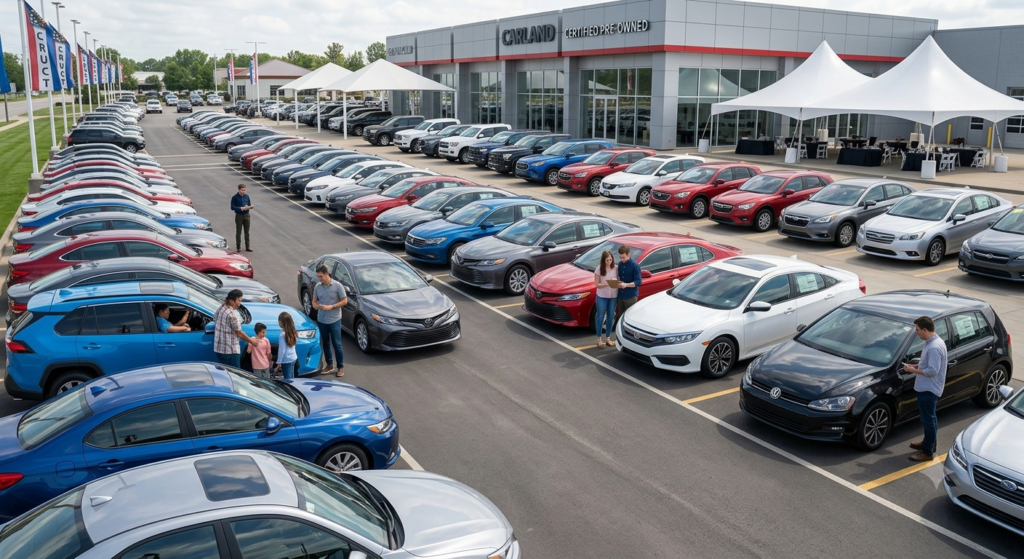
Option 1 — Certified Pre-Owned (CPO) from a dealership
Best option for peace of mind. CPO cars have passed a manufacturer inspection and often come with extended warranty coverage. More expensive but significantly lower risk.
Option 2 — Used car dealership
More convenient than private sales. Reputable dealerships will allow independent inspections and provide some form of warranty. Always check reviews of the dealership before visiting.
Option 3 — Private seller
Potentially the best price but highest risk. No warranty, no recourse if problems emerge after purchase. Requires the most thorough inspection.
Option 4 — Online marketplaces
Sites like CarGurus, AutoTrader, or local equivalents offer large selection and price comparison tools. Useful for research but always inspect in person before buying.
Red flags when searching:
- Price significantly below market value — if it seems too good to be true, it usually is
- Seller unwilling to allow inspection by a mechanic
- Very recent registration change or multiple owners in short period
- Photos taken only at night or in poor lighting
- Seller pressuring for quick decision or cash only payment
---
Step 5 — Inspect the Car Thoroughly
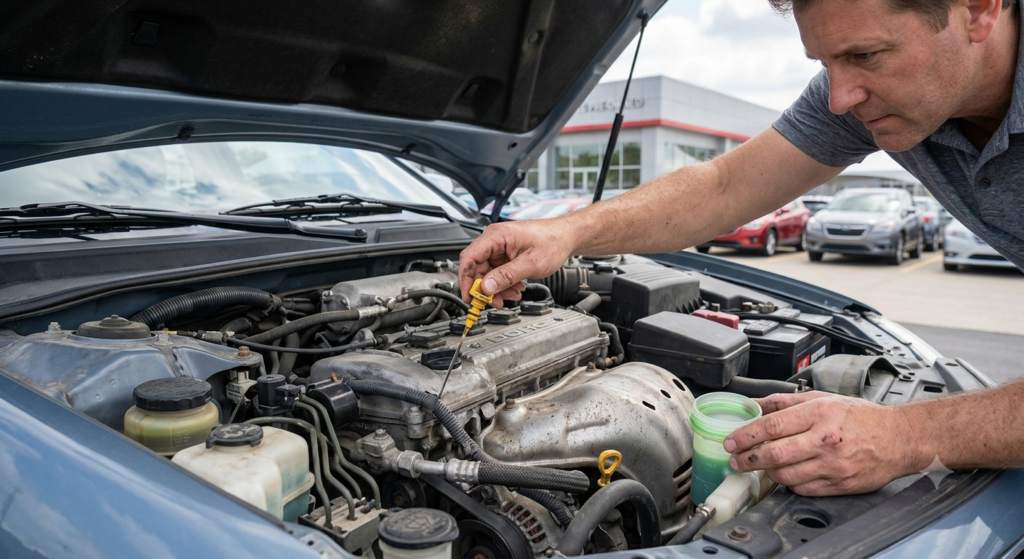
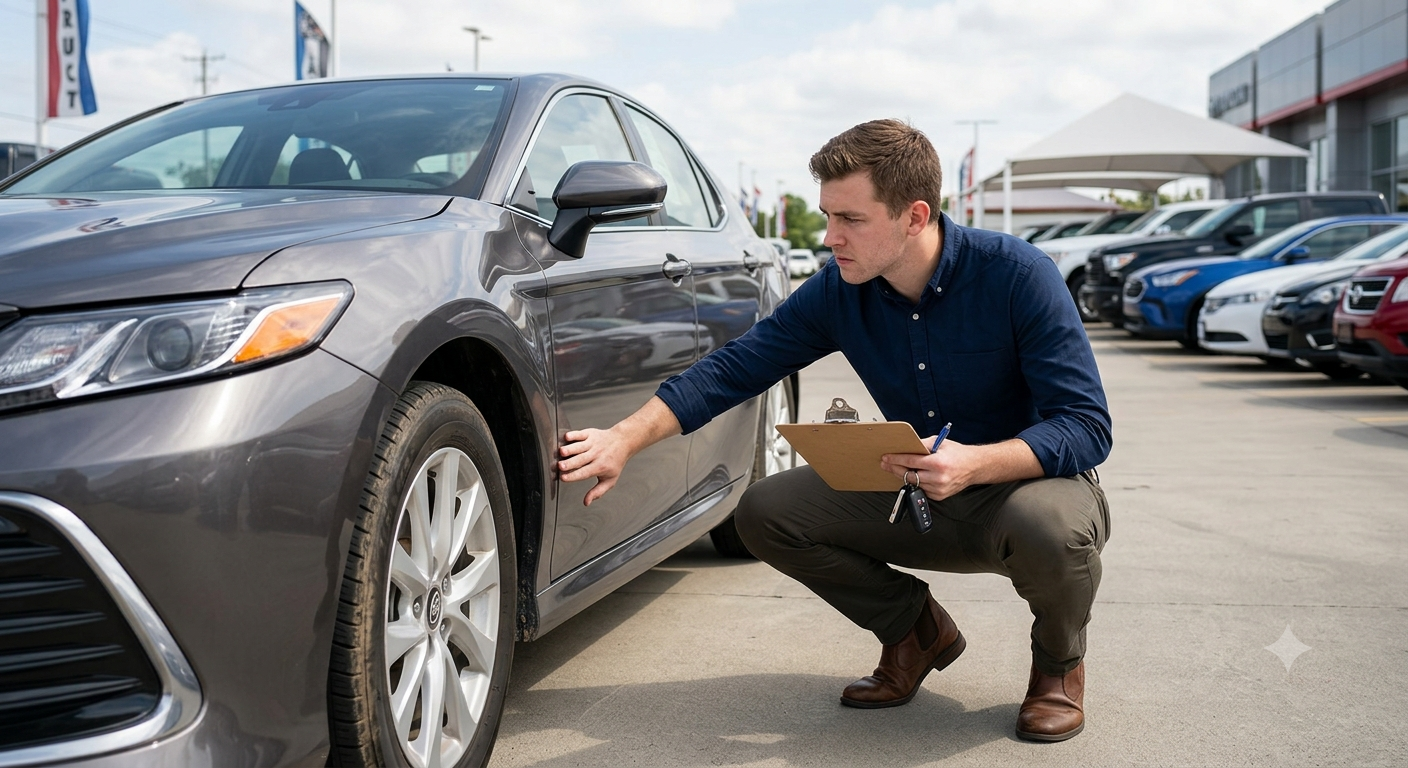
This is where most buyers make their biggest mistakes. Never buy a used car without a thorough inspection. Always inspect in daylight — never at night or in rain when problems are hidden.
Exterior inspection:
Walk around the entire car looking for:
- Uneven panel gaps — suggests previous accident repair
- Paint color mismatches between panels — suggests repainting after damage
- Rust — check wheel arches, door sills, and underneath the car
- Dents, scratches, and chips — minor ones are normal, major damage is a concern
- Condition of tires — uneven wear suggests alignment or suspension problems
- Check all lights work — headlights, taillights, indicators, brake lights
Interior inspection:
- Check all seats for tears, stains, and excessive wear
- Test every button, switch, and control
- Test air conditioning and heating — both should work properly
- Check all windows open and close correctly
- Look for water stains on carpets or ceiling — suggests water leaks
- Check for unusual smells — mold, burning, or heavy air freshener (often used to hide odors)
- Test infotainment system — all functions should work
Under the hood inspection:
- Check engine oil — should be clean and at correct level. Black, gritty oil suggests poor maintenance.
- Check coolant level and color — should be bright green or pink, not brown or rusty
- Look for oil leaks — stains on engine components or underneath the car
- Check condition of belts — should not be cracked or frayed
- Look for any signs of steam or burning around the engine
Test drive — never skip this:
Drive the car for at least 20-30 minutes covering:
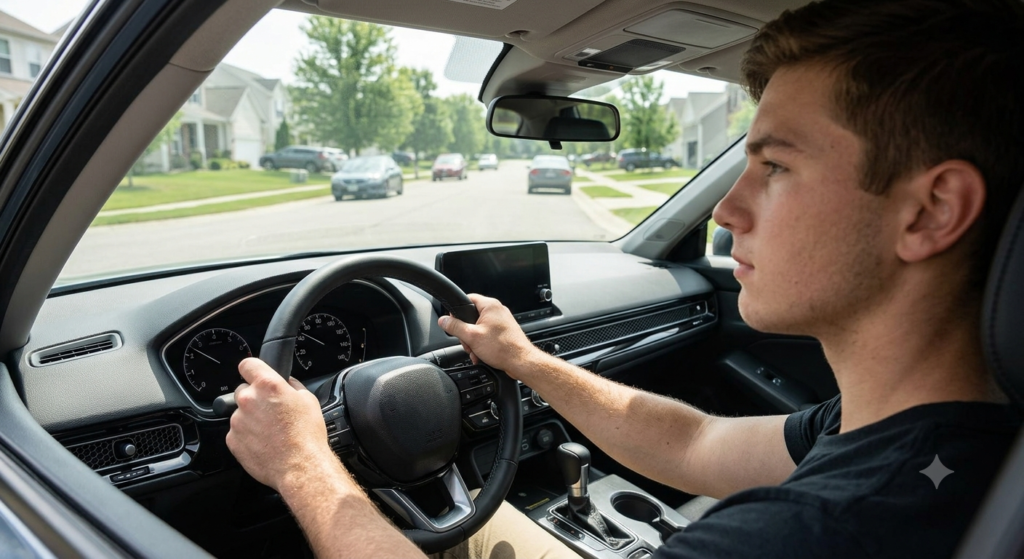
- City driving — stop-start traffic
- Highway speeds — check for vibrations or pulling
- Braking — should be smooth and straight with no pulling
- Acceleration — should feel smooth with no hesitation or misfires
- Listen for unusual noises — knocking, grinding, rattling
- Check all gears shift smoothly (automatic and manual)
- Test the parking brake
---
Step 6 — Get an Independent Mechanic Inspection
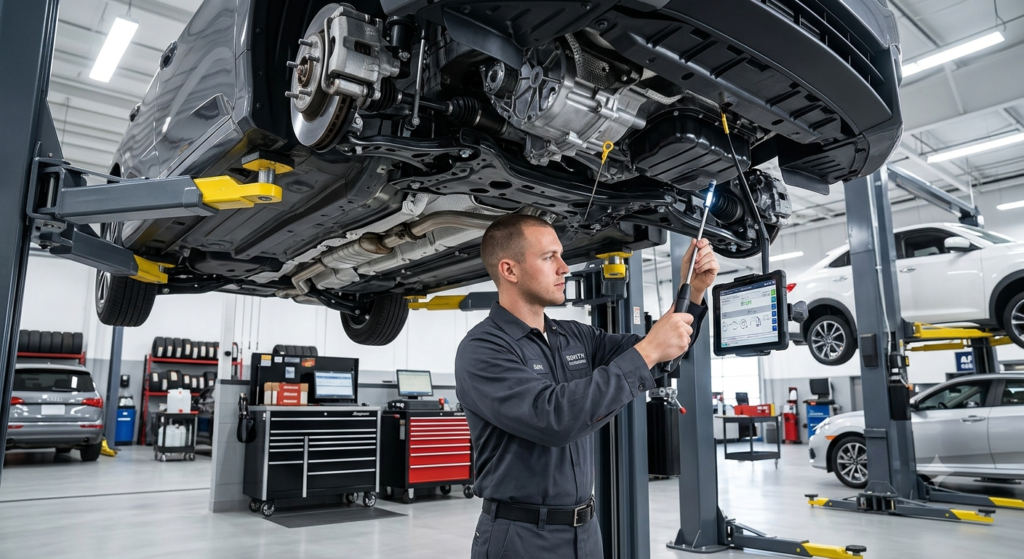
If you are serious about buying a car, pay for an independent mechanic inspection. This typically costs $100-$150 and can save you thousands.
A good mechanic will:
- Put the car on a lift and inspect underneath
- Check for frame damage or accident history
- Test brake pad thickness
- Check suspension components
- Scan for electronic fault codes
- Give you an honest assessment of the car's condition
If a seller refuses to allow an independent inspection — walk away immediately. This is almost always a sign of something to hide.
---
Step 7 — Check the Vehicle History
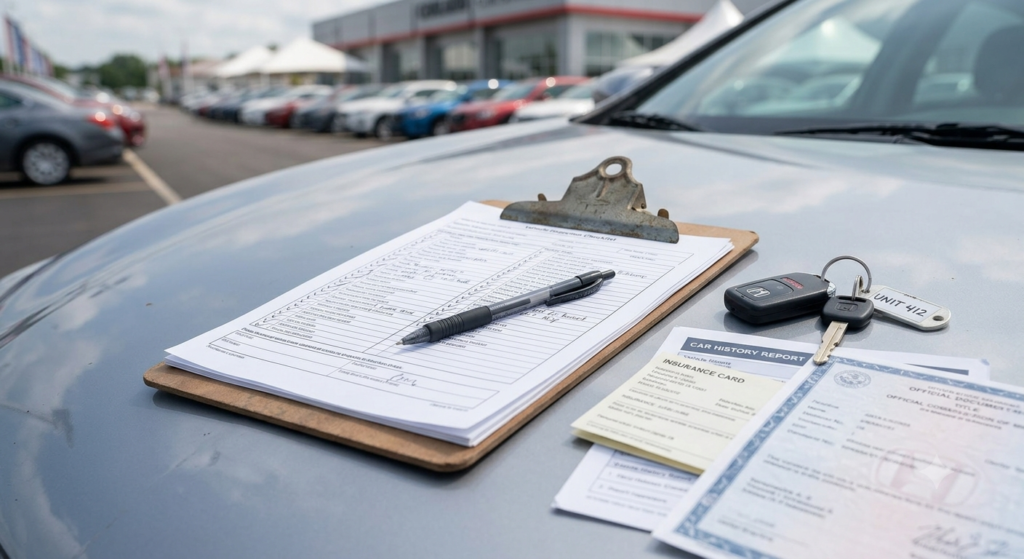
Always check the vehicle history report before buying. In most markets this is available through services like Carfax or AutoCheck using the car's VIN (Vehicle Identification Number).
A vehicle history report will show:
- Number of previous owners
- Accident history and severity
- Service and maintenance records
- Odometer readings over time (detects mileage fraud)
- Whether the car has been reported stolen
- Whether the car has outstanding finance
Never buy a used car without checking its history. This is non-negotiable.
---
Step 8 — Negotiate the Price Confidently
Many buyers pay more than they need to simply because they do not negotiate. Used car prices are almost always negotiable — often by 5-15%.
Negotiation tips:
Research the market price first — know what comparable cars are selling for. Use this as your reference point.
Point out any issues found during inspection — every fault you identified during inspection is a legitimate reason to ask for a price reduction.
Be willing to walk away — the most powerful negotiating position is genuine willingness to leave. If the seller knows you will walk, they are much more likely to meet your price.
Do not negotiate monthly payments — always negotiate the total purchase price. Monthly payment negotiation often results in paying more overall through longer loan terms.
Aim to negotiate at least:
- 5% off asking price for cars in excellent condition
- 10-15% off for cars with any identified issues
- More if the car has been listed for a long time
---
Step 9 — Sort the Paperwork Carefully
Never rush the paperwork stage. Every document matters.
Documents to check and obtain:
Title/ownership document — must be in the seller's name. If it is not, do not buy.
Service history records — complete service history adds value and confirms maintenance
MOT or roadworthiness certificates — check validity
Outstanding finance check — confirm no money is owed against the car
Bill of sale — always get a written receipt of the transaction
Warranty documentation — if CPO or dealer warranty, get all terms in writing
In Pakistan specifically:
- Ensure transfer of ownership (transfer of registration) is completed properly
- Check for any outstanding challan (traffic fines) against the vehicle
- Verify the engine number and chassis number match the documents
---
Step 10 — Common Mistakes to Avoid
Here are the most common and costly mistakes used car buyers make:
Mistake 1 — Buying based on emotion
Falling in love with a car before inspecting it properly leads to overlooking problems. Stay objective.
Mistake 2 — Not test driving
Never buy a car without driving it. Period.
Mistake 3 — Trusting low mileage alone
Low mileage does not guarantee good condition. A car driven 5,000 miles per year but never serviced can be in worse condition than one with 80,000 well-maintained miles.
Mistake 4 — Skipping the mechanic inspection
The $100-$150 inspection fee is the best money you will spend in the entire buying process.
Mistake 5 — Paying cash with no paperwork
Always get a proper written receipt regardless of payment method.
Mistake 6 — Buying the first car you see
Look at multiple cars. Comparison makes you a better buyer and a stronger negotiator.
Mistake 7 — Ignoring running costs
A cheap purchase price means nothing if the car costs a fortune to fuel, insure, and maintain.
---
Used Car Buying Checklist
Print this or save it on your phone to use when inspecting:
EXTERIOR:
☐ Panel gaps even all around
☐ No paint color mismatches
☐ No significant rust
☐ Tires in good condition and even wear
☐ All lights working
INTERIOR:
☐ Seats in good condition
☐ All buttons and controls working
☐ AC and heating working
☐ No water stains or mold smell
☐ Infotainment system working
ENGINE:
☐ Oil clean and at correct level
☐ No oil leaks visible
☐ Coolant at correct level and clean color
☐ No unusual smells or steam
TEST DRIVE:
☐ No unusual noises
☐ Brakes smooth and straight
☐ All gears shifting correctly
☐ No vibrations at highway speed
☐ Parking brake working
PAPERWORK:
☐ Title in seller's name
☐ Service history available
☐ Vehicle history report checked
☐ No outstanding finance
☐ Written receipt obtained
---
Frequently Asked Questions (FAQ)
Q: How many kilometers is too many for a used car?
A: Mileage alone is not the best indicator of condition. A well-maintained car with 150,000 km can be more reliable than a neglected car with 50,000 km. Focus on service history and overall condition rather than mileage alone. For most buyers, under 100,000 km with good service history is a comfortable starting point.
Q: Should I buy a used car from a dealer or private seller?
A: Dealers offer more security — warranty, ability to finance, and some recourse if problems arise. Private sellers offer potentially lower prices but with higher risk. For first-time buyers, a reputable dealer or CPO program is recommended.
Q: Is it safe to buy a used car online?
A: Use online platforms for research and finding options, but always inspect in person before buying. Never pay for a car without seeing it physically.
Q: How do I know if a used car has been in an accident?
A: Check for uneven panel gaps, paint mismatches, and signs of filler or repainting. Get a vehicle history report which will show accident records. Have a mechanic inspect for frame or structural damage.
Q: What is the best used car to buy for reliability?
A: Toyota and Honda consistently top reliability surveys worldwide. The Toyota Corolla, Toyota Camry, Honda Civic, and Honda Accord are consistently among the most reliable used cars available at any age or mileage.
---
Final Verdict
Buying a used car successfully comes down to preparation, patience, and discipline. Follow the ten steps in this guide, use the checklist during your inspection, and never let excitement or pressure rush you into a decision.
The perfect used car for your needs is out there. Take your time, do your research, get the inspection done, and negotiate confidently. When you drive away in the right car at the right price, the effort will have been completely worth it.
---
Related Articles:
- Best Family SUVs in 2026
- Toyota RAV4 2026 Review
- Best Affordable Electric Cars in 2025 and 2026
- How to Find the Cheapest Car Insurance in 2026