Now Reading: Electric Car vs Petrol Car in 2026: Which Should You Buy?
-
01
Electric Car vs Petrol Car in 2026: Which Should You Buy?


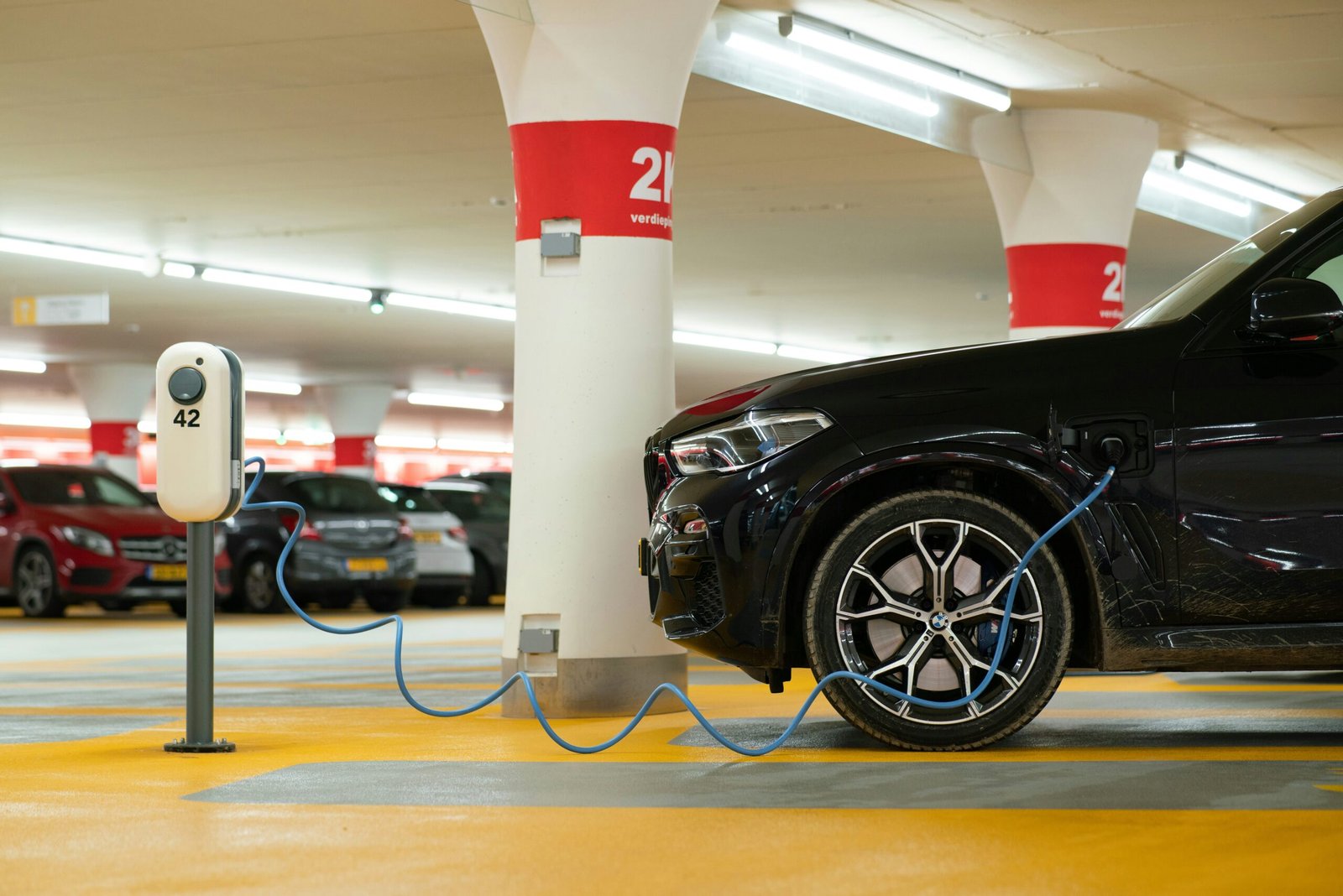
A few years ago this was still a debate. Today in 2026 it is one of the most important car buying decisions millions of people around the world are making — and the answer is no longer as simple as "electric cars are the future, buy one."
The truth is more nuanced. Electric cars are genuinely better than petrol cars in many important ways. But petrol cars still make more sense for certain buyers in certain situations. This guide will give you the complete, honest comparison so you can make the right decision for your life — not just follow a trend.
I have researched real ownership data, running cost calculations, reliability records, and long-term value figures for both types of vehicles. Here is everything you need to know.
---
The Big Picture — Where We Are in 2026
Electric vehicle sales have grown dramatically over the past five years. In 2026 EVs account for approximately 20% of all new car sales globally — up from just 4% in 2020. Charging infrastructure has expanded significantly in most developed markets.
However petrol cars still represent 80% of new car sales and the vast majority of cars on the road worldwide. They are not going anywhere soon — and for many buyers in many markets, they remain the more practical choice.
The key is understanding which type of car fits your specific situation.
---
1. Purchase Price Comparison
Petrol Cars:
Entry-level petrol cars start from as low as $15,000-$20,000 for a basic new model. Used petrol cars are available from a few thousand dollars. The range of price options is enormous.
Electric Cars:
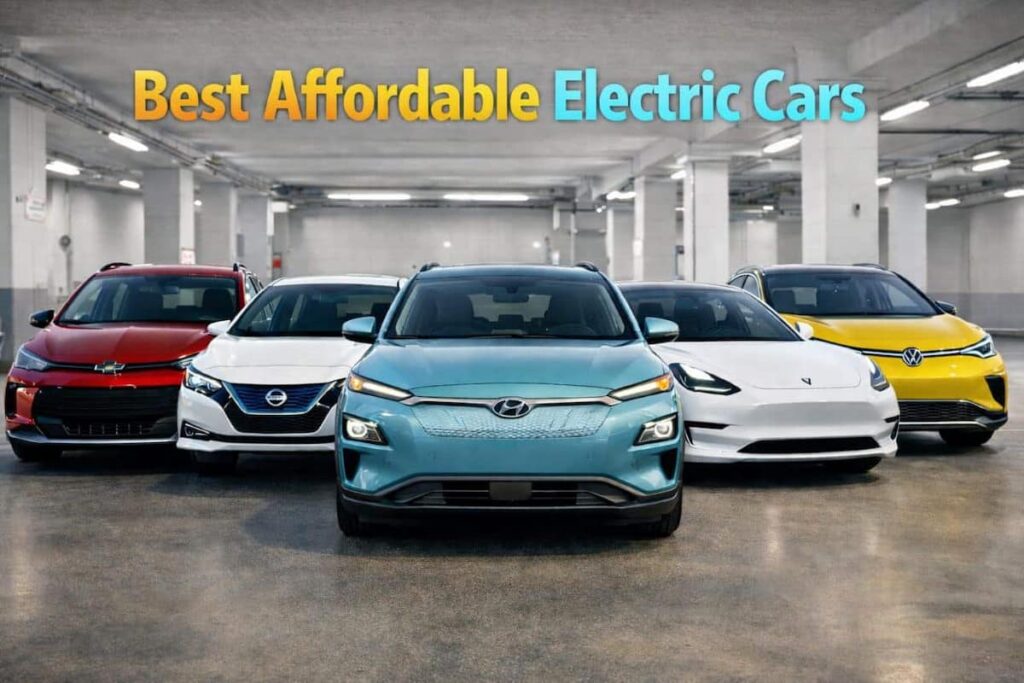
The cheapest new EVs in 2026 start at approximately $25,000-$27,000 (Chevrolet Bolt EV). Most practical EVs cost $30,000-$45,000. Premium EVs can cost $80,000 or more.
Verdict — Purchase Price: PETROL WINS
Petrol cars are still significantly cheaper to buy, especially at the entry level and in the used car market. However government incentives in many markets can reduce the EV price gap substantially.
Key point: In the US, many EVs qualify for a $7,500 federal tax credit which meaningfully closes the price gap.
---
2. Running Costs — Fuel vs Electricity
This is where electric cars begin to fight back strongly.
Petrol running costs:
At current fuel prices, a typical petrol car costs approximately $0.10-$0.15 per kilometer to fuel depending on fuel prices and the car's efficiency.
Electric running costs:
Charging at home, a typical EV costs approximately $0.02-$0.04 per kilometer — roughly 3-5 times cheaper than petrol.
Real world example:
If you drive 15,000 km per year:
- Petrol car fuel cost: approximately $1,500-$2,250 per year
- Electric car charging cost: approximately $300-$600 per year
- Annual saving with EV: approximately $900-$1,650
Over five years that saving is $4,500-$8,250 — a significant amount that helps offset the higher purchase price of an EV.
In Pakistan context:
With rising petrol prices, the running cost advantage of EVs is even more significant. Electricity costs per kilometer are dramatically lower than CNG or petrol in most Pakistani cities.
Verdict — Running Costs: ELECTRIC WINS CLEARLY
---
3. Maintenance Costs
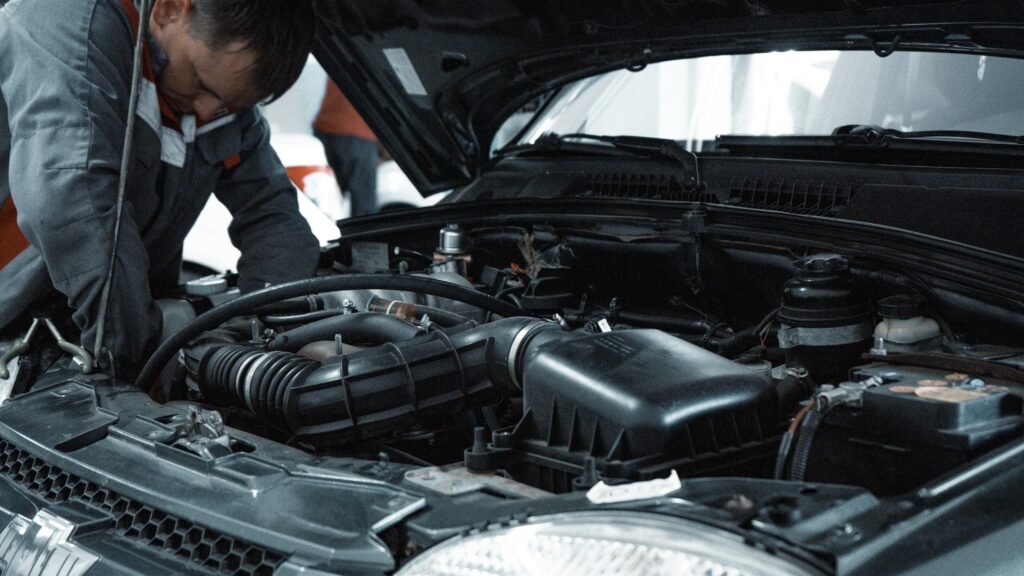
Electric cars have fundamentally fewer moving parts than petrol cars. This translates directly into lower maintenance costs.
What EVs do NOT need:
- Oil changes
- Spark plug replacements
- Timing belt service
- Exhaust system maintenance
- Transmission fluid changes (most EVs have single-speed transmission)
- Clutch replacement (no clutch in most EVs)
What EVs still need:
- Tyre rotation and replacement
- Brake fluid changes (though brake pads last longer due to regenerative braking)
- Cabin air filter changes
- Wiper blade replacements
- Battery health monitoring
Annual maintenance cost comparison:
- Average petrol car: $800-$1,200 per year
- Average electric car: $400-$600 per year
Over 5 years the maintenance saving is approximately $2,000-$3,000.
Verdict — Maintenance: ELECTRIC WINS
---
4. Range and Charging vs Refueling
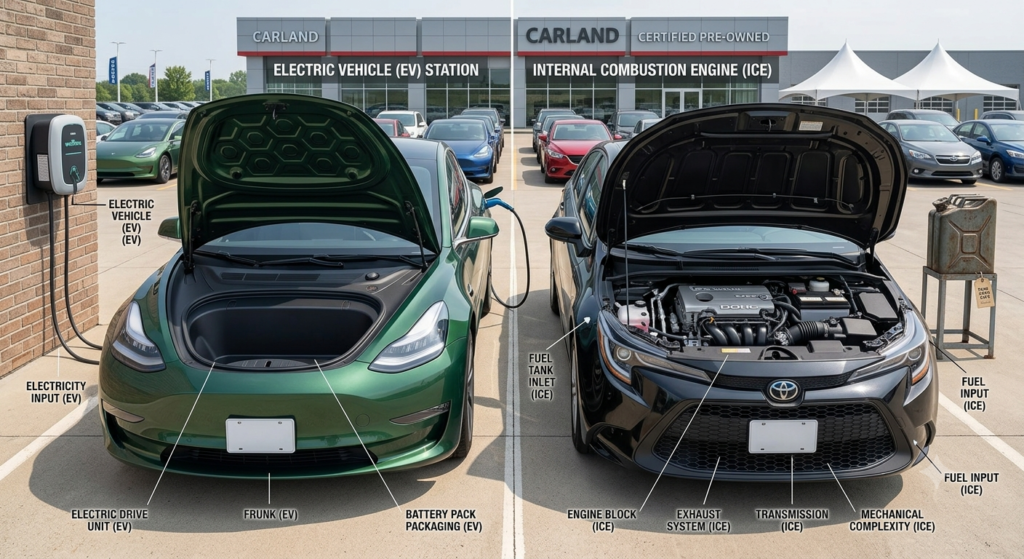
This is the area where petrol cars still hold a genuine practical advantage for many drivers.
Petrol cars:
- Typical range: 500-700 km on a full tank
- Refueling time: 3-5 minutes
- Fuel stations: Available almost everywhere in the world
Electric cars:
- Typical range in 2026: 300-580 km depending on model
- Fast charging time: 20-45 minutes for 80% charge
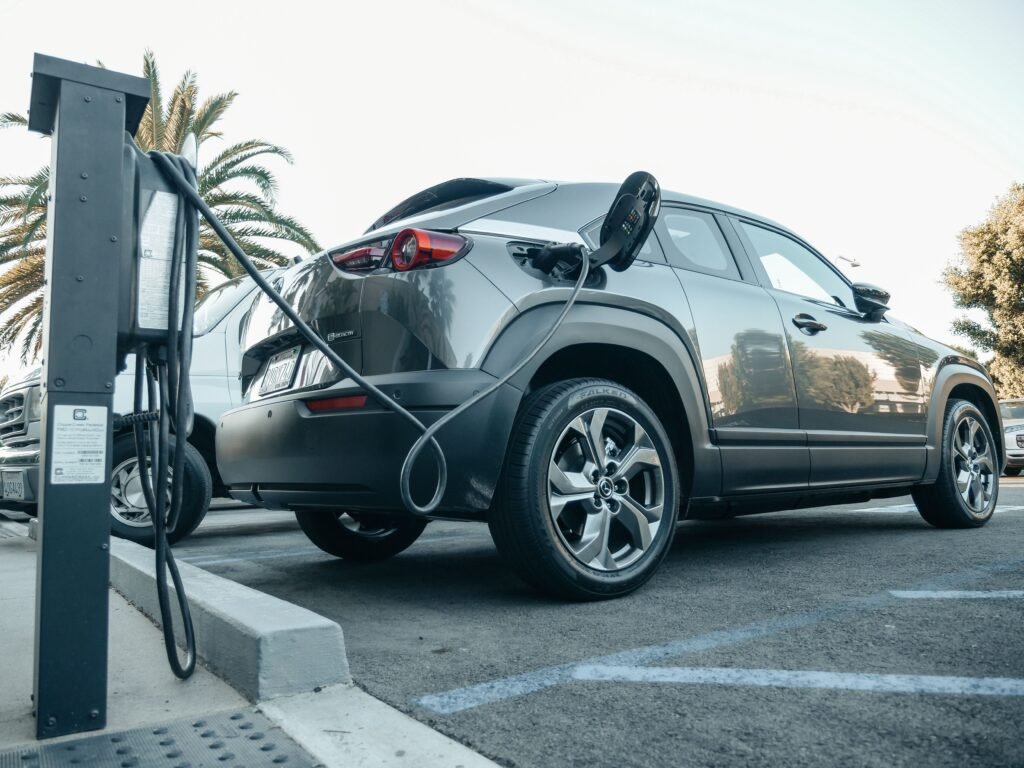
- Charging infrastructure: Excellent in cities and on major routes in developed markets — still limited in rural areas and developing markets
The honest truth about range anxiety:
For most people's daily driving — commuting, school runs, grocery shopping — even a modest EV with 250 km of range is more than adequate. Most people drive less than 50 km per day.
The challenge arises with:
- Long road trips in areas with limited charging infrastructure
- Living in an apartment without home charging access
- Driving in very hot or cold climates where battery range reduces
In Pakistan specifically:
Charging infrastructure is still developing in Pakistan. Major cities like Karachi, Lahore, and Islamabad have growing charging networks but intercity travel remains challenging for EV owners. For buyers in smaller cities or rural areas, petrol remains significantly more practical.
Verdict — Range and Convenience: PETROL WINS for long trips and developing markets. ELECTRIC WINS for daily urban commuting.
---
5. Performance
This one surprises many people who have not experienced a modern EV.
Electric cars deliver instant torque — maximum power is available the moment you press the accelerator. There is no gearbox to shift, no turbo to spool up, no delay. The result is acceleration that feels dramatically quicker than the numbers suggest.
Performance comparison examples:
| Car | 0-100 km/h | Price |
|-----|------------|-------|
| Tesla Model 3 Performance | 3.1 seconds | ~$50,990 |
| BMW M3 (petrol) | 3.5 seconds | ~$75,995 |
| Porsche Taycan Turbo S | 2.4 seconds | ~$202,500 |
| Porsche 911 GT3 (petrol) | 3.4 seconds | ~$187,500 |
Electric cars offer supercar performance at family car prices — a genuinely remarkable development.
However for driving purists, petrol engines still offer something EVs cannot fully replicate — the sound, the feeling of gear changes, and the visceral connection to the mechanical process of combustion. For many enthusiasts this matters enormously.
Verdict — Performance: ELECTRIC WINS on raw numbers. PETROL WINS on driving emotion and sound.
---
6. Environmental Impact
This is complex and often misunderstood. Let us look at it honestly.
Electric cars produce zero direct emissions while driving. In cities and areas with clean electricity grids, the lifetime carbon footprint of an EV is significantly lower than a petrol car.
However the full picture includes:
- Battery manufacturing — producing an EV battery creates more carbon emissions than manufacturing a petrol car. This carbon debt is typically paid back within 1-3 years of driving.
- Electricity source — an EV charged on a coal-heavy grid produces more indirect emissions than one charged on renewable energy.
- Battery disposal — end-of-life battery recycling is improving but remains a challenge.
The honest verdict:
In most markets with reasonably clean electricity grids, electric cars are significantly better for the environment over their lifetime. In markets where electricity comes primarily from coal, the advantage is smaller but still usually present.
Verdict — Environment: ELECTRIC WINS in most markets
---
7. Long-Term Reliability and Resale Value
Reliability:
Electric cars have fewer mechanical parts and in theory should be more reliable. Early data supports this — Consumer Reports shows EVs have significantly lower mechanical failure rates than petrol cars.
However EV-specific concerns exist:
- Battery degradation over time — most EV batteries lose 10-20% capacity over 100,000-150,000 km
- Battery replacement cost is very high — $8,000-$20,000 depending on the model
- Software issues can affect entire vehicle systems
- Repair costs can be higher at non-specialist workshops
Petrol cars benefit from:
- Decades of proven reliability data
- Widely available parts and expertise globally
- Much cheaper repair costs in most markets
Resale Value:
Petrol cars currently have more predictable resale values in most markets. EV resale values vary significantly depending on remaining battery health and local charging infrastructure.
Verdict — Long-term Reliability: PETROL still edges ahead for now, especially in markets with limited EV service infrastructure.
---
8. Technology and Features
Modern EVs typically lead the technology race. Features like over-the-air software updates, advanced driver assistance, large touchscreen interfaces, and integrated smartphone connectivity are more common and more advanced in EVs than comparable petrol cars.
Tesla's over-the-air updates mean your car can gain new features years after purchase. This is genuinely revolutionary compared to traditional cars that are essentially frozen at the specification they left the factory with.
Verdict — Technology: ELECTRIC WINS
---
Complete Comparison Summary
| Category | Electric Car | Petrol Car | Winner |
|----------|-------------|------------|--------|
| Purchase Price | Higher | Lower | Petrol |
| Fuel/Running Cost | Much lower | Higher | Electric |
| Maintenance Cost | Lower | Higher | Electric |
| Range | 300-580 km | 500-700 km | Petrol |
| Charging/Refueling | 20-45 min | 3-5 min | Petrol |
| Performance | Instant torque | Gradual | Electric |
| Environment | Better | Worse | Electric |
| Technology | More advanced | Less advanced | Electric |
| Reliability Data | Less proven | More proven | Petrol |
| Infrastructure | Still developing | Widely available | Petrol |
Score: Electric 5 — Petrol 4
(But context matters enormously)
---
Who Should Buy an Electric Car in 2026?
You are an ideal EV buyer if:
✅ You have home charging access (garage or private parking)
✅ You drive primarily in the city or on routes with good charging infrastructure
✅ Your daily driving is under 150 km
✅ You want to minimize running and maintenance costs
✅ You live in a market with good EV charging networks
✅ You care about environmental impact
✅ You enjoy technology and modern features
---
Who Should Stick with a Petrol Car in 2026?
A petrol car still makes more sense if:
✅ You frequently drive long distances between cities
✅ You live in an area with limited charging infrastructure
✅ You rely on apartment building parking without charging access
✅ Budget is tight — petrol cars are cheaper to buy especially used
✅ You live in Pakistan, rural Asia, or areas where EV infrastructure is limited
✅ You need maximum range predictability for your work
✅ You prefer proven long-term reliability data
---
Frequently Asked Questions (FAQ)
Q: Are electric cars cheaper to run than petrol cars?
A: Yes — significantly. Electricity costs per kilometer are typically 3-5 times cheaper than petrol. Combined with lower maintenance costs, most EV owners save $1,500-$3,000 per year in running costs compared to equivalent petrol cars.
Q: How long do electric car batteries last?
A: Modern EV batteries are designed to last 150,000-300,000 km or 15-20 years. Most manufacturers offer 8-year battery warranties. Real-world data shows most EV batteries retain 80%+ of their capacity after 200,000 km.
Q: Is it worth buying an electric car in Pakistan in 2026?
A: For urban residents of major cities like Karachi, Lahore, and Islamabad — potentially yes, especially with rising petrol prices. For those in smaller cities or rural areas, petrol remains more practical due to limited charging infrastructure. The situation is improving rapidly however.
Q: Which is better for the environment — electric or petrol?
A: Electric cars produce significantly lower lifetime carbon emissions in most markets, even accounting for battery manufacturing. In Pakistan where electricity comes partly from fossil fuels, the advantage is smaller but still generally present.
Q: Will petrol cars be banned?
A: Many countries have announced targets to phase out new petrol car sales — the UK by 2035, the EU by 2035, and several others. These are targets for new car sales only — existing petrol cars will continue to be used for many years beyond these dates.
---
Final Verdict
In 2026 electric cars are genuinely better than petrol cars for many buyers — particularly urban commuters with home charging access in markets with good charging infrastructure.
But petrol cars remain the more practical, more affordable, and more accessible choice for buyers in developing markets, rural areas, or those who regularly need long-distance range without charging stops.
The best advice is simple: honestly assess your driving patterns, your charging options, and your budget — then choose accordingly. Both technologies are mature and capable. The right choice is the one that fits your real life, not the one that sounds most impressive at a dinner party.
Electric or petrol — the best car is the right car for you.
---
Related Articles:
- Best Affordable Electric Cars in 2025 and 2026
- Tesla Model 3 2026 Review
- Best Family SUVs in 2026
- How to Buy a Used Car in 2026