Now Reading: Hybrid Cars vs Electric Cars in 2026: Which One Should You Buy?
-
01
Hybrid Cars vs Electric Cars in 2026: Which One Should You Buy?


A few years ago the question was simple — petrol or diesel? Today the choice is far more interesting and far more consequential. Millions of buyers around the world are now choosing between hybrid cars and fully electric cars — and the decision is not as straightforward as the headlines might suggest.
Both technologies are mature, proven, and genuinely excellent. But they suit different buyers in different situations. Buy the wrong one for your lifestyle and you will spend years frustrated by a car that does not fit how you actually live and drive.
I have researched both technologies in depth — going through real ownership data, long-term reliability records, total cost of ownership calculations, and real-world range and charging experiences — to give you the clearest, most honest comparison available.
By the end of this guide you will know exactly which technology is right for you.
First — Understanding the Different Types
Before we compare, let us make sure we understand exactly what we are comparing. There are actually three types of electrified vehicles — and understanding the differences is important.
Type 1 — Conventional Hybrid (HEV)
Examples: Toyota Prius, Honda Accord Hybrid, Toyota RAV4 Hybrid
How it works: Has both a petrol engine and an electric motor. The battery charges itself automatically through regenerative braking and the petrol engine — you never plug it in. The electric motor assists the petrol engine to improve fuel economy and reduce emissions.
Key characteristic: You fill it with petrol just like a normal car. No charging required. The hybrid system works completely automatically in the background.
Type 2 — Plug-in Hybrid (PHEV)
Examples: Toyota RAV4 Prime, Mitsubishi Outlander PHEV, Kia Sportage PHEV
How it works: Has a larger battery than a conventional hybrid that you can charge by plugging in. Can drive on pure electricity for a limited range — typically 30-80 km — before the petrol engine takes over. Can also be used exactly like a conventional hybrid if you never plug it in.
Key characteristic: Best of both worlds — electric driving for daily commutes, petrol engine for longer trips. Plugging in saves money but is optional.
Type 3 — Battery Electric Vehicle (BEV)
Examples: Tesla Model 3, Hyundai IONIQ 6, Chevrolet Equinox EV
How it works: Runs entirely on electricity stored in a large battery. No petrol engine. Must be charged by plugging in — either at home or at public charging stations.
Key characteristic: Zero direct emissions, lowest running costs, but requires access to charging and has a finite range between charges.
For this comparison we will focus primarily on conventional hybrids versus full electric vehicles — the most common choice buyers face.
What is a Hybrid Car — The Complete Picture
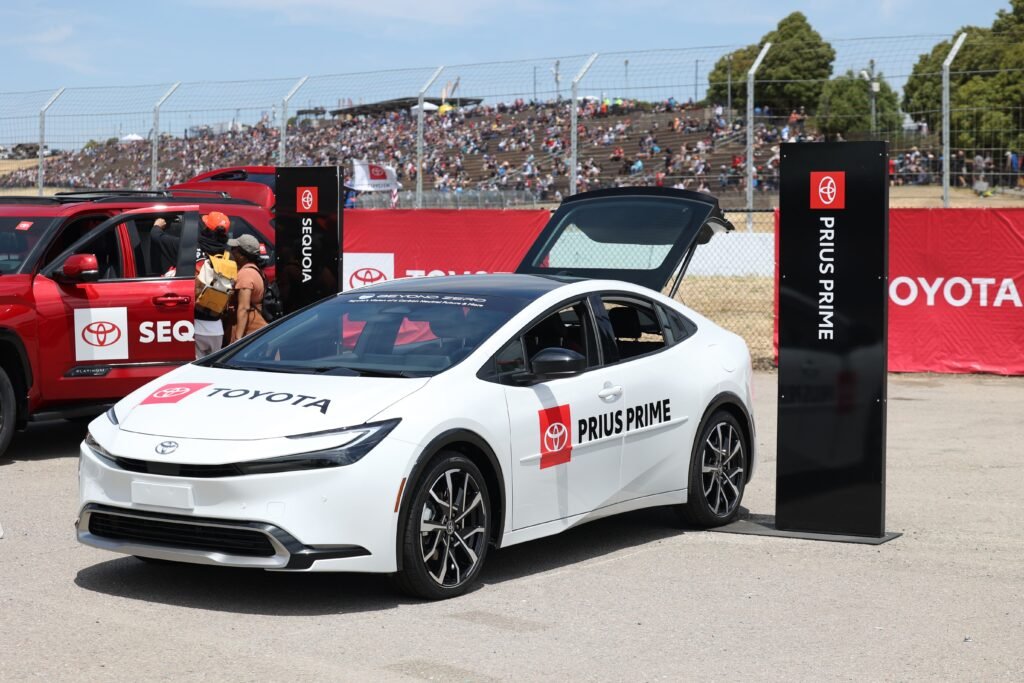
A conventional hybrid car is the most accessible entry point into electrified motoring. It looks like a normal car, drives like a normal car, and is refueled like a normal car — at a petrol station in under five minutes.
The hybrid system works silently in the background. At low speeds and light throttle the car runs on electricity alone. At higher speeds or heavier throttle the petrol engine joins in. During braking and deceleration regenerative braking captures energy that would otherwise be wasted as heat and stores it in the battery.
The result is fuel economy typically 30-50% better than an equivalent petrol car — without any of the charging infrastructure requirements of a full EV.
Best hybrid cars in 2026:
- Toyota RAV4 Hybrid — best family hybrid SUV
- Toyota Camry Hybrid — best hybrid sedan
- Honda CR-V Hybrid — best urban hybrid SUV
- Toyota Corolla Hybrid — best budget hybrid
- Hyundai Tucson Hybrid — best value hybrid SUV
Who hybrids are best for:
✅ Drivers in areas with limited charging infrastructure
✅ Those who regularly drive long distances
✅ Apartment dwellers without home charging access
✅ Buyers who want better fuel economy without lifestyle changes
✅ Anyone in a developing market like Pakistan where EV charging is limited
What is an Electric Car — The Complete Picture
A fully electric car runs entirely on electricity stored in a large battery pack. There is no petrol engine, no exhaust pipe, no oil changes, and no trips to a fuel station — ever.
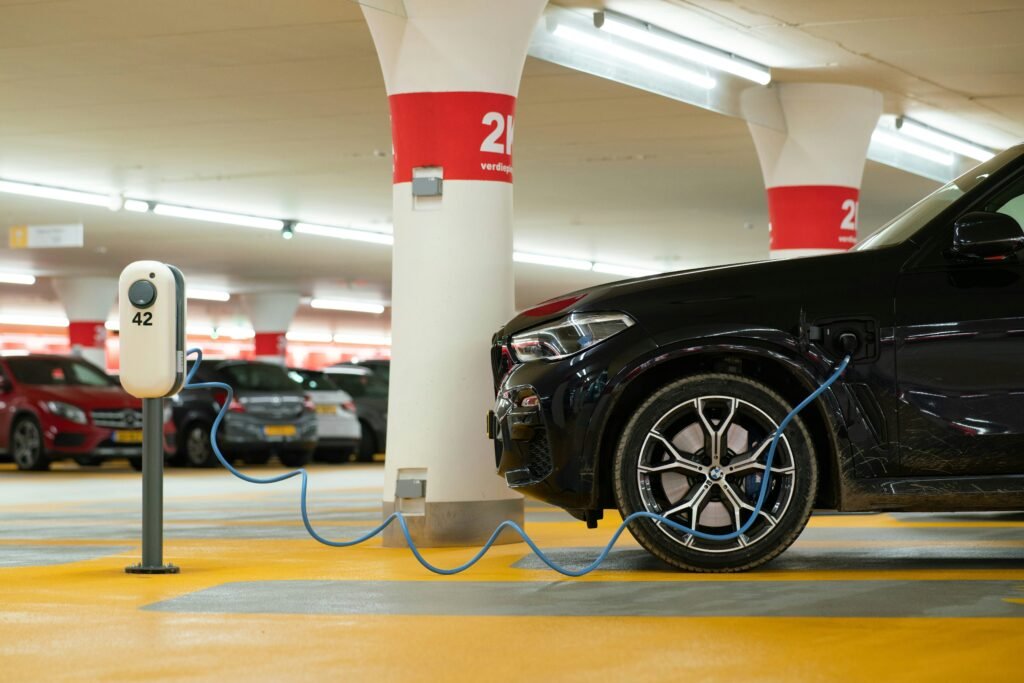
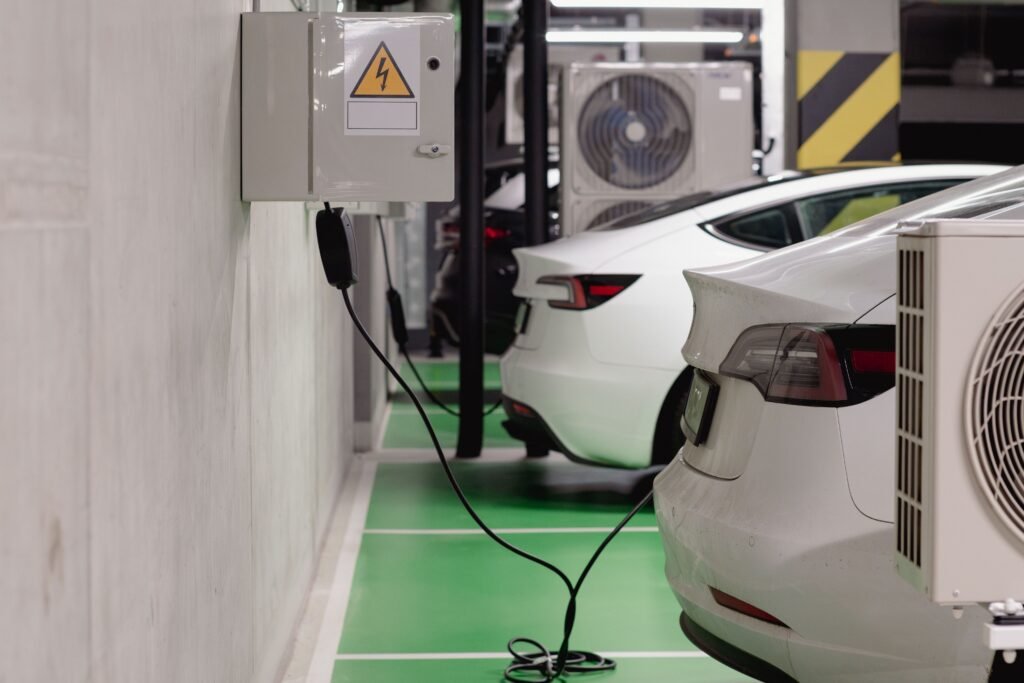
Instead of refueling you charge — either at home using a dedicated wall charger, or at public fast-charging stations. For most EV owners with home charging, the experience is remarkably convenient — you plug in when you arrive home and wake up every morning with a full charge. It is like having a full tank of fuel every single morning without ever going to a petrol station.
The electric motor delivers instant torque — giving EVs characteristically strong, smooth acceleration from a standstill. Even modestly priced EVs feel quicker than their specifications suggest because all the power is available immediately.
Best electric cars in 2026:
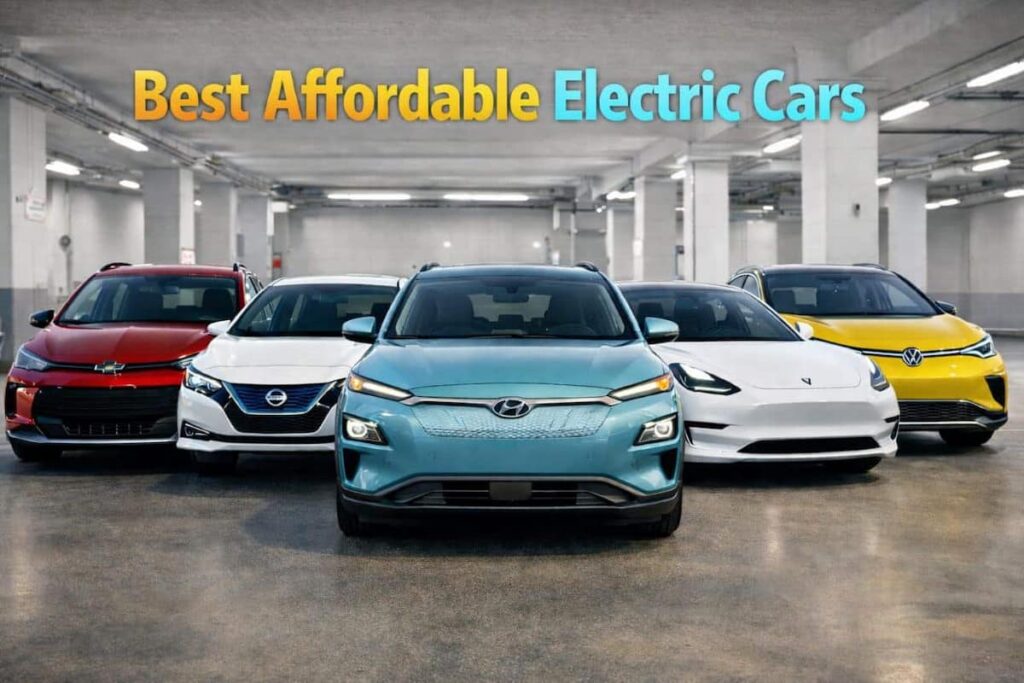
- Tesla Model 3 — best overall electric car
- Hyundai IONIQ 6 — best range and charging speed
- Chevrolet Equinox EV — best value electric car
- Kia EV6 — most fun to drive EV
- Volkswagen ID.4 — best family electric SUV
Who EVs are best for:
✅ Drivers with home charging access
✅ Daily commuters with predictable shorter journeys
✅ City dwellers in areas with good public charging
✅ Buyers who want the lowest possible running costs
✅ Technology enthusiasts who want the latest features

The Complete Comparison — Hybrid vs Electric
Category 1 — Purchase Price
Hybrid cars:
Hybrid cars carry a premium over their petrol equivalents — typically $2,000-$5,000 more. However they are significantly cheaper than equivalent EVs.
Example comparisons:
- Toyota Corolla petrol: $22,050 | Toyota Corolla Hybrid: $24,350 | Difference: $2,300
- Honda CR-V petrol: $30,650 | Honda CR-V Hybrid: $34,350 | Difference: $3,700
Electric cars:
EVs typically cost $5,000-$15,000 more than equivalent petrol cars at the same size and feature level. However government incentives in many markets significantly reduce this gap.
Example comparisons:
- Chevrolet Trax (petrol): $21,495 | Chevrolet Equinox EV: $34,995 | Difference: $13,500
- Toyota Corolla: $22,050 | Toyota bZ4X (EV equivalent): $42,000+ | Difference: $20,000+
Verdict — Purchase Price: HYBRID WINS
Hybrids are significantly cheaper to buy than equivalent EVs. This gap narrows with government incentives but rarely disappears entirely.
Category 2 — Fuel and Running Costs
Hybrid running costs:
Hybrids use 30-50% less fuel than equivalent petrol cars. A typical hybrid might achieve 18-22 km per liter in mixed driving compared to 12-14 km per liter for a petrol equivalent.
Annual fuel saving (15,000 km per year):
- Petrol car at 13 km/liter: approximately 1,154 liters of petrol
- Hybrid at 20 km/liter: approximately 750 liters of petrol
- Annual saving: approximately 404 liters — significant money at current fuel prices
Electric running costs:
Charging at home costs approximately $0.02-$0.04 per km — roughly 5-8 times cheaper than petrol per km driven.
Annual running cost comparison (15,000 km):
- Petrol car: $1,500-$2,500 per year in fuel
- Hybrid car: $900-$1,500 per year in fuel
- Electric car (home charging): $300-$600 per year in electricity
Verdict — Running Costs: ELECTRIC WINS CLEARLY
EVs cost dramatically less to run than both petrol and hybrid cars when charged primarily at home.
Category 3 — Maintenance Costs
Hybrid maintenance:
Hybrids require most of the same maintenance as petrol cars — oil changes, spark plug replacement, exhaust maintenance — plus occasional hybrid battery checks. However regenerative braking significantly extends brake pad life.
Annual maintenance cost: $600-$1,000
Electric maintenance:
EVs have dramatically fewer moving parts than petrol or hybrid cars. No oil changes, no spark plugs, no exhaust system, no timing belt, no transmission fluid in most cases. Brake pads last much longer due to regenerative braking.
Annual maintenance cost: $300-$500
Verdict — Maintenance: ELECTRIC WINS
Category 4 — Range and Refueling/Charging
Hybrid range:
Hybrids have the same range as petrol cars — typically 600-800 km on a full tank. Refueling takes 3-5 minutes at any petrol station anywhere in the world.
This is hybrid’s most significant advantage — zero range anxiety, zero infrastructure dependency.
Electric range:
Modern EVs offer 300-580 km per charge in 2026. Charging at a fast public charger takes 20-45 minutes for 80%. Home charging overnight is the most convenient for daily use.
In Pakistan: EV charging infrastructure is still developing. Major cities have growing networks but intercity travel remains challenging. For buyers outside major cities or without home charging, range remains a real concern.
Verdict — Range and Convenience: HYBRID WINS
This is hybrid’s clearest advantage — especially in developing markets and for long-distance drivers.
Category 5 — Environmental Impact
Hybrid environmental impact:
Hybrids produce 30-50% less CO2 than equivalent petrol cars. They produce zero direct emissions when running on the electric motor at low speeds.
Electric environmental impact:
EVs produce zero direct emissions. Over their full lifecycle — including battery manufacturing and electricity generation — EVs produce 50-70% less CO2 than petrol cars in most markets.
The environmental advantage of EVs grows as electricity grids become cleaner with more renewable energy.
Verdict — Environment: ELECTRIC WINS
Category 6 — Reliability and Longevity
Hybrid reliability:
Toyota hybrids in particular have an exceptional reliability record — the Prius has been in production since 1997 and the technology is thoroughly proven. Hybrid batteries typically last 200,000-300,000 km with minimal degradation. Toyota offers 8-10 year hybrid battery warranties.
Electric reliability:
EV reliability data is less mature but improving rapidly. Early concerns about battery degradation have proven less severe than feared in practice — most EV batteries retain 80%+ capacity after 200,000 km. However repair costs when things go wrong can be very high due to specialist requirements.
Verdict — Reliability: HYBRID EDGES AHEAD
Toyota and Honda hybrids have decades of proven reliability data. EVs are improving rapidly but have less long-term history.
Category 7 — Performance and Driving Experience
Hybrid performance:
Hybrids offer smooth, refined everyday performance. The electric motor provides a boost at low speeds making them feel quicker than their petrol engine power alone would suggest. However the driving experience is fundamentally similar to a petrol car.
Electric performance:
The instant torque delivery of electric motors transforms the driving experience. Even modest EVs feel dramatically quicker than their numbers suggest because all power is available immediately from zero. The Hyundai IONIQ 6 accelerates to 100 km/h in 5.1 seconds. The Tesla Model 3 Performance does it in 3.1 seconds.
EVs are also remarkably quiet and smooth — no engine noise, no gear changes, no vibration.
Verdict — Performance and Feel: ELECTRIC WINS
Complete Comparison Summary
| Category | Hybrid | Electric | Winner |
|---|---|---|---|
| Purchase price | Lower | Higher | Hybrid |
| Running costs | Medium | Lowest | Electric |
| Maintenance costs | Medium | Lowest | Electric |
| Range | 600-800 km | 300-580 km | Hybrid |
| Refuel/Recharge time | 3-5 minutes | 20-45 minutes | Hybrid |
| Environmental impact | Good | Better | Electric |
| Reliability data | More proven | Less proven | Hybrid |
| Performance feel | Good | Excellent | Electric |
| Infrastructure needs | None | Charging needed | Hybrid |
| Technology features | Standard | More advanced | Electric |
Score: Electric 5 — Hybrid 4 — but context is everything
Who Should Buy a Hybrid in 2026?
A hybrid is the right choice if:
✅ You live in Pakistan or another market with limited EV charging
✅ You regularly drive long distances between cities
✅ You live in an apartment without home charging access
✅ You want better fuel economy with zero lifestyle changes
✅ Budget is a primary concern — hybrids cost less to buy
✅ You drive in areas where public charging is unreliable
✅ You want the most proven, mature electrified technology
Best hybrid to buy: Toyota RAV4 Hybrid or Toyota Corolla Hybrid
Who Should Buy an Electric Car in 2026?
An EV is the right choice if:
✅ You have access to home charging — garage or private parking
✅ Your daily driving is primarily urban or suburban
✅ You live in a city with good public charging infrastructure
✅ You want the absolute lowest running and maintenance costs
✅ You are excited by technology and modern features
✅ You care deeply about environmental impact
✅ You want the best performance feel for the money
Best EV to buy: Chevrolet Equinox EV for value, Tesla Model 3 for technology, Hyundai IONIQ 6 for range
What About Plug-in Hybrids (PHEV)?
If you genuinely cannot decide between hybrid and electric, a plug-in hybrid (PHEV) may be the perfect middle ground.
A PHEV gives you:
- 30-80 km of pure electric range for daily commuting
- Full petrol engine range for longer trips — no range anxiety
- Much lower running costs than a conventional hybrid if you charge regularly
- No commitment to full EV infrastructure dependency
Best PHEVs in 2026:
- Toyota RAV4 Prime — best overall PHEV
- Mitsubishi Outlander PHEV — most affordable PHEV SUV
- Kia Sportage PHEV — best value PHEV
The PHEV is particularly compelling for Pakistani buyers who want to benefit from electric running costs for city driving while retaining petrol range for intercity travel where charging infrastructure is limited.
Frequently Asked Questions (FAQ)
Q: Is a hybrid or electric car better for Pakistan in 2026?
A: For most Pakistani buyers a hybrid — particularly a Toyota hybrid — is currently the more practical choice. Charging infrastructure outside major cities is still limited, petrol stations are everywhere, and Toyota hybrids have exceptional reliability records that work well in Pakistani conditions. However for urban buyers in Karachi, Lahore, or Islamabad with home charging access, EVs are increasingly viable.
Q: Do hybrid car batteries need replacing?
A: Hybrid batteries are designed to last the life of the vehicle in most cases. Toyota hybrid batteries typically last 200,000-300,000 km. Toyota offers an 8-10 year warranty on hybrid batteries. Replacement cost when eventually needed is $1,500-$4,000 depending on the model.
Q: Are electric cars more expensive to insure than hybrids?
A: Generally yes — EVs cost slightly more to insure due to their higher purchase price and specialist repair requirements. However the gap is narrowing as more insurers develop EV-specific policies.
Q: Which lasts longer — a hybrid or electric car?
A: Both can last a very long time with proper maintenance. Toyota hybrids regularly exceed 300,000 km. EV longevity data is less mature but improving — Tesla batteries for example show only about 10-15% degradation after 300,000 km in real-world data.
Q: Can I charge a hybrid car?
A: A conventional hybrid charges itself automatically through regenerative braking — you cannot plug it in. A plug-in hybrid (PHEV) can be plugged in to charge the larger battery. A full electric car must be plugged in to charge.
Q: Which has better resale value — hybrid or electric?
A: Currently hybrid cars — especially Toyota hybrids — have more predictable and stronger resale values in most markets including Pakistan. EV resale values vary more depending on battery health and local charging infrastructure development.

Final Verdict
In 2026 both hybrid and electric cars are genuinely excellent technologies — the choice between them comes down entirely to your specific situation.
If you have home charging access and primarily drive urban routes — choose electric. The running cost savings, maintenance savings, and driving experience make a compelling case.
If you drive long distances, live in a market with limited charging infrastructure like Pakistan, or simply want maximum convenience with zero lifestyle changes — choose a hybrid. Toyota hybrids in particular offer a proven, reliable, and genuinely fuel-efficient alternative to petrol that requires no compromise whatsoever.
And if you want the best of both worlds — consider a plug-in hybrid. Drive on electricity for daily commuting, petrol for everything else.
There is no wrong answer — just the right answer for your life.
Related Articles:
- Best Affordable Electric Cars in 2025 and 2026
- Electric Car vs Petrol Car in 2026
- Toyota RAV4 2026 Review
- Best Cars Under $30,000 in 2026